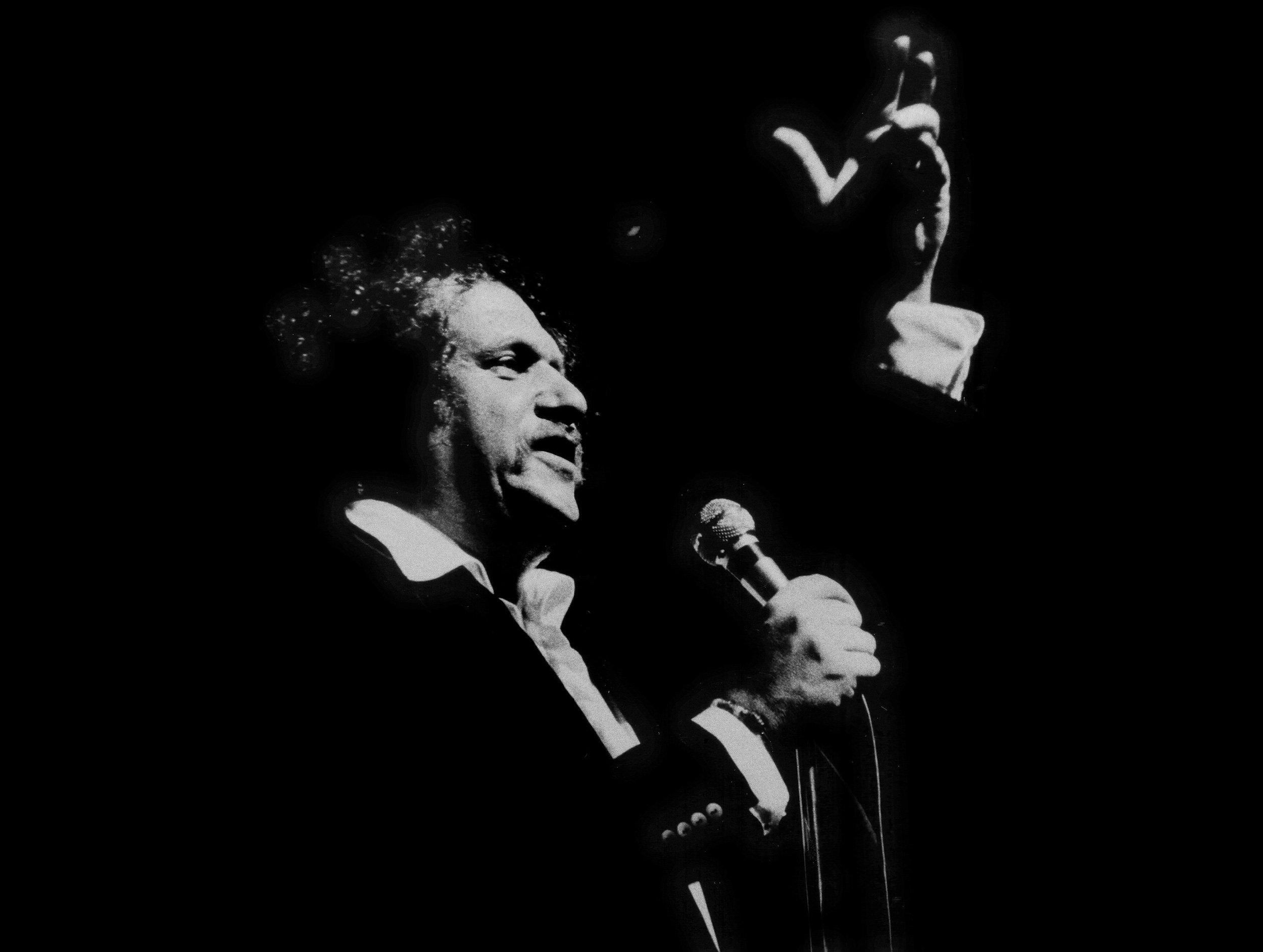
Biography
1938
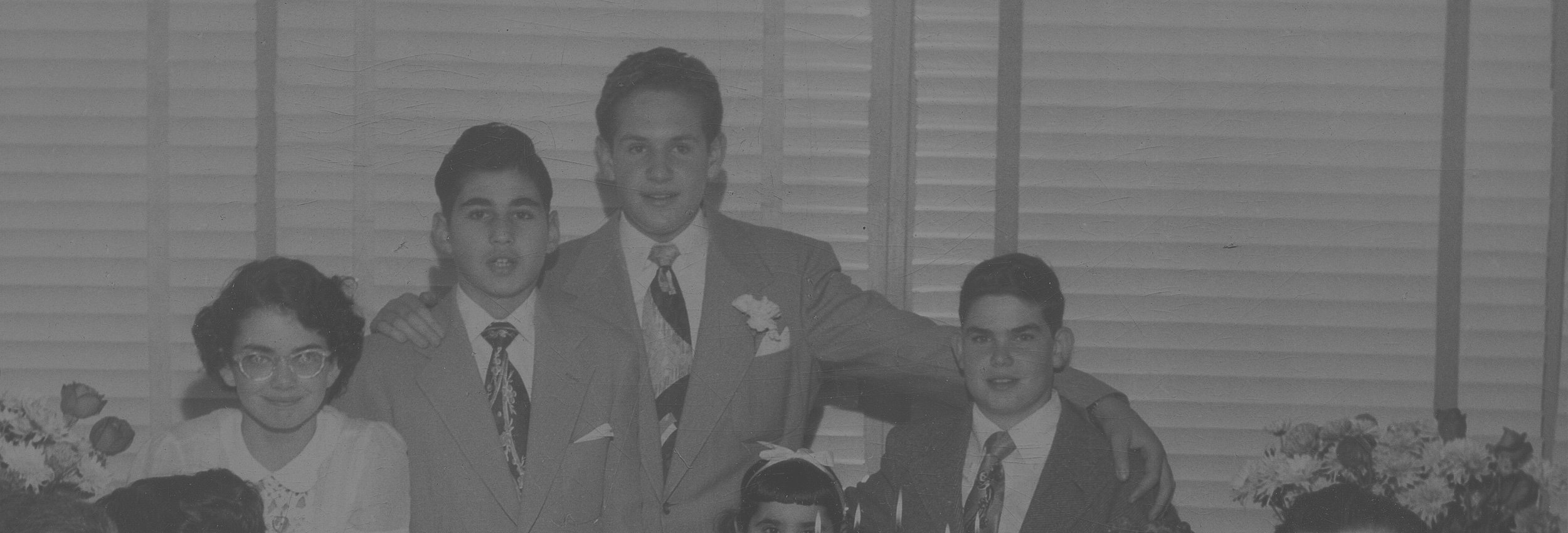
Mortimer Shuman is born on 12 November 1938 in Brighton Beach (Brooklyn by the Sea, as he calls it in his 1973 song of that name). His parents, Louis and Esther, are Polish Jewish immigrants. He lives in the same apartment block as Neil Sedaka, and both learn classical piano at the Juilliard School of Music.
1953
At 15, Mort goes to the New York City College to study philosophy, but after a year is expelled for spending too much time playing piano in bars. He loves R&B and Latin music: a favourite song is 'Please Don't Leave Me' by Fats Domino, released this year.
This year, Mort is also introduced to Doc Pomus by Doc's cousin, Neysha. Although 15 years older, Doc befriends Mort and takes him on as an apprentice. Mort sits with Doc, absorbing everything. At first, Doc gives Mort only fifteen per cent of the publishing, but soon they write together as equal partners, with Doc mostly writing the lyrics and Mort the melodies. Mort usually also sings on their demos.
Click images below to enlarge
1956
Mort and Doc's first release together is The Tibbs Brothers' recording of '(Wake Up) Miss Rip Van Winkle', a 78 RPM release on Atco Records. Their first record to make the US pop charts, also released in 1956 on the same label, is 'Love Roller Coaster' by Big Joe Turner.
1957
In November, a friend of Doc's sets up a record company, R&B Recording Corporation, at 1650 Broadway in New York. Doc and Mort are employed to write for its acts. This venture lasts for only one release, 'Kiss and Make Up' by The Crowns, released in 1958, whose lead singer is Ben E. King. Soon after, George Treadwell, manager of the vocal group The Drifters, fires its members en masse and hires the members of The Crowns to take their place.
Although Mort writes rock and roll and R&B, he still loves Latin music and enjoys jazz, which influences his melodic writing. He is a regular at The Palladium, a Latin/American ballroom on West 53rd Street and Broadway, where he hears musicians like Tito Puente and Machita and hangs out with jazz musicians like Horace Silver, Art Taylor and Johnny Griffin.
1958
Otis Blackwell, writer of 'Don't Be Cruel' and 'All Shook Up' for Elvis Presley, introduces Doc and Mort to the Aberbachs, who own another music publishing company, Hill and Range. They sign Doc and Mort to a three-year songwriting deal. Mort and Doc are also sent to LA to write music for record producer Snuffy Garrett, and Mort spends time working in Mexico.
1959
After enjoying success with several Atlantic acts, including Ray Charles, Bobby Darin, LaVern Baker, and Clyde McPhatter, Mort and Doc's big breakthrough comes when Hill and Range direct them to write for Elvis Presley. Their first attempt, 'I'm A Man', is rejected by Elvis, but it is recorded a year later, along with 'Turn Me Loose', by Fabian Forte, a teen idol who records as Fabian. Both singles become US hits, peaking at no. 31 and no. 9.
Mort and Doc are then asked to write for a new group called The Mystics, and they come up with 'Teenager In Love' (originally written as 'It's Great To Be Young And In Love'). After hearing the song, the label thinks it is too strong for a new band and gives it to Dion & The Belmonts, who already have some chart success. Dion has a top 5 US hit with his version of the song in March 1959, while Marty Wilde's version in the UK, his biggest hit, gets to No. 2.
Mort and Doc then give The Mystics their first top 20 US hit with 'Hushabye', released in April this year.
Later in the year, British television producer Jack Good persuades Mort and Doc to travel to the UK for a special edition of the ITV show 'Boy Meets Girl', which they record on 21 November. The show celebrates their songs, and Mort performs 'I'm A Man' to rapturous applause.
After the show, Jack Good records Mort singing 'I'm A Man' and 'Turn Me Loose' at Decca Studios. Mort also records a piano-and-voice demo of a song he and Doc wrote back in the US, 'A Mess of Blues'. Mort and Doc stay in the UK for several months to meet contemporary British stars including Tommy Steele, Lionel Bart and Anthony Newley.
During their UK trip, they also manage to get a demo of 'A Mess of Blues' to Elvis Presley in Germany, where he is stationed as a US soldier, via his friend Lamar Fike.
When Mort and Doc finally return to the US, Hill & Range has moved to a new office in 1619 Broadway – The Brill Building. Jean Aberbach proudly gives Doc and Mort a spacious and luxurious office, but after a few weeks of inactivity, they ask for a place where they can really work. They get one: a tiny space with two old chairs, an upright piano and an ashtray. Mort and Doc finish the 1950s with three US hits: 'Go Johnny Go' with Jimmy Clanton (US no. 5), 'Hound Dog Man' with Fabian (US no. 9), and '(If You Cry) True Love, True Love' for The Drifters (US no. 33).
Brill Building Further Reading
The Brill Building Sound
Brill Building Pop
Brill Building Songwriters

1960s
The 1960s start well for Mort and Doc. After writing 'This Magic Moment' for The Drifters, which reaches 16 in the US charts (a version by Jay & The Americans later reaches no. 6 in 1968), 'Save the Last Dance For Me', The Drifters' follow-up single, reaches No 1 in the US charts and No 2 in the UK. With an unforgettable lyric by Doc and a melody by Mort, drawing upon his love for Latin American music, this is Mort and Doc's first US No 1. It becomes The Drifters' biggest hit. 'Save The Last Dance For Me' is nominated for Grammy Song of the Year in 1960, and later is inducted into the Grammy Hall of Fame as a Recording of Lasting, Qualitative and Historical Significance. In March, after his discharge from the US Army, Elvis Presley records A Mess Of Blues at RCA Studio B in Nashville, Tennessee. It becomes the b-side in the US to 'It's Now Or Never', reaching 32 in the US charts and 2 in the UK. Mort and Doc go on to write sixteen songs for Elvis, but neither ever meets him. (In 1983, Status Quo's version of 'A Mess of Blues' reaches no 15 in the UK charts.)
1961
Doc and Mort next supply Elvis with 'Surrender', which goes to no 1 in the US and UK in March, and has widespread international success. In June, Elvis records a Doc and Mort double A-side, 'Marie's the Name (His Latest Flame)' and 'Little Sister', which goes to no. 4 in the US and no. 1 in the UK. These two songs were originally written for Bobby Vee, but his producer, Snuff Garrett, thought their sound was too rock'n'roll for his artist (he recorded instead 'All You Gotta Do is Touch Me'). In October, one of Doc and Mort's best-known compositions, The Drifters' single 'Sweets For My Sweet', with Mort on the piano, charts at 16 in the States. Two years later, The Searchers' version goes to no. 1 in the UK for two weeks, and in 1994, British singer CJ Lewis has a number 3 hit in the UK with his reggae cover version.
1962
The 'Pot Luck With Elvis' album is released in the UK, featuring four of Mort and Doc's songs, including 'Suspicion', reaching no. 9. Terry Stafford's version of 'Suspicion' tops 5 in the US. It's Trad, Dad, the first feature film by Richard Lester, who later directed A Hard Day's Night and Help! for The Beatles, is released, including three Doc and Mort songs. 'Seven Day Weekend', performed by Gary U.S. Bonds, is released as a single, getting to no. 27 in the US, and the soundtrack also includes two of Mort and Doc's songs recorded by Del Shannon ('Ginny in the Mirror' and 'You Never Talked About Me').
1963
Andy Williams has a US and UK no. 2 hit with Doc and Mort's 'Can't Get Used to Losing You', a song initially rejected by ten other artists but later covered by many, including Patti Page, Paul Anka, and Amen Corner. UK group The Beat (known in the US as The English Beat) takes its reggae-influenced cover version to no. 3 in the UK charts in 1983. Beyoncé also samples Andy Williams' version on her track, Hold Up, from her 2016 album, Lemonade.
1964
In April, Elvis Presley's performance of 'Viva Las Vegas', from the film of the same name and Elvis's biggest box office success, is released, reaching only 29 in the US and 17 in the UK. It is subsequently covered by artists including Bruce Springsteen, ZZ Top and The Dead Kennedys, whose version is used in Terry Gilliam's 1998 film about Hunter S. Thompson, 'Fear and Loathing in Las Vegas'. In 1964, Mort also spent time in the UK writing hits for British acts. These include songs for The Small Faces ('Sha La La La Lee', no. 3), Cilla Black ('Love's Just a Broken Heart', no. 1), Billy J. Kramer ('Little Children', no. 1) and The Hollies ('Here I Go Again', no. 4).
1965
By the mid-sixties, Doc and Mort have begun to drift apart and work on separate projects. They both write separately with Jerry Ragovoy. Mort co-writes soul songs including 'I've Got A Good Thing' and 'What's it Gonna Be' for Dusty Springfield, 'My Baby', 'It's Been Such A Long Way Home' and 'It Was Easier To Hurt Her' for Garnet Mimms, and 'Look At Granny Run, Run', 'Get it While You Can' and 'Stop' for soul singer Howard Tate, all of which are US Top 20 R&B hits. 'My Baby' and 'Get It While You Can' are later recorded by Janis Joplin for her solo album, 'Pearl'. 'Stop' is also regularly performed in concert by Jimi Hendrix and his last band, Band of Gypsys. He records the song live at Fillmore East shortly before his death.
1966
Doc and Mort get back together in 1966 to write and produce 'Bring Him Back' and 'World of Broken Hearts' for Cissy Houston. They also write 'Petticoat White (Summer Sky Blue)', 'All the King's Horses (And All the King's Men)' and 'You Own My Heart' for Bobby Vinton and 'Say Those Magic Words' for The McCoys, which is also covered this year by English R&B band The Birds.
Mort and Doc's last collaboration for Elvis, 'Double Trouble', is recorded this year. Mort later writes one further song for Elvis without Doc, 'You'll Think of Me', in 1969.
Pomus and Shuman have written over 500 songs between 1958 and 1965.
1966 - 1968
While holidaying and partying in St Tropez in 1966, Mort discovers and falls in love with the work of the Belgian singer-songwriter Jacques Brel. Returning to New York, he and poet Eric Blau translate 25 of Brel's songs and create the show 'Jacques Brel is Alive and Well and Living In Paris'.
The original show debuts Off-Broadway on January 22, 1968, at The Village Gate Theatre in Greenwich Village and runs for more than four years. Its original performers are Elly Stone, Mort Shuman, Shawn Elliott and Alice Whitfield. Moni Yakim directs the production. Columbia Records releases a double album of the original cast's performances.
The show becomes one of the longest-running off-Broadway musicals and subsequently tours extensively across North America and the rest of the world. Sir Peter Hall presents the show at the Platform at the National Theatre in London.
Mort's translations of Brel's works are recorded by many artists including, most famously, Scott Walker ('Mathilde', 'Amsterdam' and 'My Death' on his 1967 debut solo album 'Scott', 'Jacky' (recorded as 'Jackie'), 'The Girls And The Dogs' and 'Next' on 'Scott 2', 'If You Go Away', 'Sons Of' and 'Funeral Tango', on 'Scott 3'), David Bowie ('Amsterdam'), Dion, Dionne Warwick and Johnny Mathis ('If We Only Have Love'), Judy Collins ('Sons of'), Alex Harvey Band ('Next') and Marc Almond ('Jacky').
1969
Reprise Records releases Mort's first solo album, 'My Death', a deeply personal, adult, eccentric, theatrical songwriting tour de force produced by Jerry Ragavoy. Cherry Red Records re-releases the album on the Rev-Ola label in 2009.

1971
The success of the 'Jacques Brel is Alive and Well and Living in Paris' revue leads to the French release of the record. The show's staging at La Taverne de l'Olympia supports this, where Mort finds an ambience similar to The Village Gate in Greenwich Village. His few short trips to Paris in previous years have charmed him. The city, the way of life, and the reception of the show there lead him to settle there. The balcony of his first Paris apartment opens over the Champ De Mars, and looks out onto the Eiffel Tower.
1972
Mort collaborates with Etienne Roda-Gil to record 'Amerika', moving away from the rock and roll and blues for which he is known in his early songwriting career toward subtle European melodies with classical influences. His nonchalant, melancholic, world-weary singing leans toward tenderness rather than Brel's tragic, aggressive style. Late in the year, his single "Le Lac Majeur", about the Italian lake Lake Maggiore, is released and reaches no. 1 in France in January 1973, where it stays for four weeks.
1973
Mort releases two albums: a French-market version of an album in English, bringing together tracks by Brel and settings of literary works by Bertolt Brecht and Baudelaire, and a second collaboration with Etienne Roda-Gil, ‘Voilà Comment’.
1974
A French/Canadian musical film, 'Jacques Brel is Alive and Well and Living in Paris', is directed by Denis Heroux and stars Mort, Elly Stone, Joe Masiell, and Jacques Brel himself. The entire film is sung, with no dialogue. The film is released in Canada and the USA in 1975 and France in 1976. An album, 'Des Chansons Sentimentales ', is released, Mort's double album 'Jacques Brel Is Alive and Well in Paris' is re-released, and Mort writes the music for a film by Michel Mitrani, 'Les Guichets Du Louvre'.
1976
Mort writes original soundtracks for three films: Michel Lang's 'A Nous les Petites Anglaises', Roger Vadim's 'Une Femme Fidèle', and Michel Vianney's 'Un Type Comme Moi Ne Devrait Jamais Mourir', in which he also acts. He also stars in André Ernotte's Belgian drama Rue Haute, alongside Annie Cordy. He then writes music with new collaborators Elisabeth Moreau and Philippe Adler, and releases a new album of chansons, 'Imagine', with an orchestra conducted by Hervé Roy. He releases three singles from the album: the title track, a version of his hit for the Drifters, 'Save The Last Dance For Me', and 'Sorrow'. 'Papa-Tango-Charly' is also performed on French TV, with Jane Birkin, Dani and Nathalie Delon joining him.
1977
Mort releases the French-language album ‘My Name Is Mortimer’, with the title track co-written with Elisabeth Moreau. This year, he also writes original soundtracks for the comedy film 'L'Hôtel de la Plage' by Michel Lang, the François Reichenbach documentary 'Sex O'Clock USA', and 'Plus Ça Va, Moins Ça Va' by Michel Vianney. This work leads him to meet film actors Michel Serrault and Jean Carmet. He also acts as police officer Ron Miglioriti alongside Jodie Foster and Martin Sheen in 'The Little Girl That Lives down The Lane', directed by Nicolas Gessner, which wins Saturn Awards for Best Horror Film and Best Actress for Foster.
1978
Mort is one of the performers on a three-month festival tour, Europe 1 Podium, sponsored by French radio station Europe 1. He also releases an album, Le Nègre Blanc, named after the title previously given to Doc Pomus, and writes an original soundtrack for L'Associé, a film directed by René Gainville.
1981
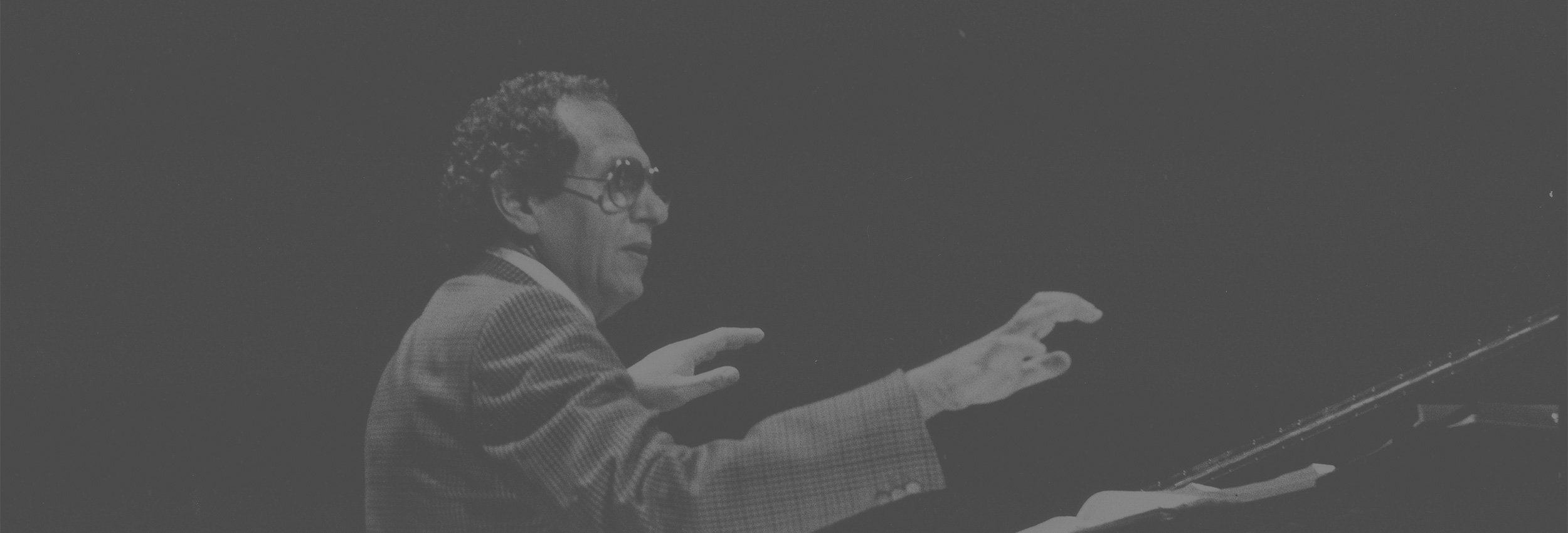
Mort collaborates again with Michel Lang for the original soundtrack of the film 'On N'est Pas Des Anges...Elles Non Plus', and acts alongside Johnny Hallyday in Claude Mulot's film, 'Le Jour Se Lève et Les Conneries Commencent'.
1982
Mort tours on the RMC Podium summer tour for 45 days. He writes a new album, Lumieres D'Amour, with new collaborators, including Laurence Matalon, Patrick Larue, Christian Eclimont and Françoise Dammien. He then works with Loïc Le Guen and Claude Lemesle on a new musical 'Ma Ville', about Paris, in which Mort expresses his attachment to this city and his happiness at living there. Although Le Guen and Mort are assured of the Paris Town Hall's support, the musical is never staged.
1983
An album of 'Ma Ville' is released, with Nicoletta and Philippe Lavil participating in the recording. It is not successful, and Mort is frustrated and deeply disappointed by its failure.
1984
After not meeting for years, Mort and Doc Pomus meet in Nashville to accept a BMI Award for Dolly Parton's top five country cover version of 'Save The Last Dance For Me'. Back in New York, they meet again and start writing together, but they never finish a song. Doc and Mort never meet again.
1985
Mort releases a new solo album, Pharaon. France Inter and Europe 1 support the title track and the B-side of the promo single ('Le Blues (Appelez ça Comme Vous Voulez)'), and French television presenter Yves Mourousi has the Egyptian rooms at the Louvre museum opened at night to televised news teams for the filming of the pop video for the title track. That same year, Mourousi performs spoken-word vocals on a new disco track, Ça Va, written, produced, and realised by Mort at the Palais des Congrès, who adds keyboards and choirs to the track.
1986
A new project stimulates Mort and keeps him in France: director Claude Bernard Auber's script for a film with the provisional title 'La Jonque', in which Mort co-stars with Lino Ventura. The film is never made. The Shuman family move to London, where Mort works on ideas for musicals and music for television productions.
1988
Mort's first West End Stage production, Budgie: The Musical, opens on 18 October at Cambridge Theatre, based on the 70s hit TV series, and starring the original lead, Adam Faith, and Anita Dobson. Mort writes the music, Bond theme songwriter Don Black the lyrics, and Keith Waterhouse and Willis Hall write the play.
1990
Mort's album 'Mortimer' goes gold in France, and he undertakes extensive promotion with many TV, radio and live appearances. He meets with Mike Ockrent to discuss a collaboration to write and develop a musical based on Vittorio de Sica's 1948 film, 'The Bicycle Thieves'. He then starts writing and recording what becomes his last solo album sung in English, 'Distant Drum', aided by musicians including Rod Argent (The Zombies), Peter Van Hooke (Van Morrison), Tim Renwick (Sutherland Brothers, Quiver, Al Stewart, Eric Clapton), Clem Clempson (Colosseum, Humble Pie), Mo Foster (Jeff Beck, Joan Armatrading/Phil Collins), and Russ Ballard (The Roulettes).
1991
Mort writes and produces all the music for a French TV series called Salut Les Copains ('Hi, Little Bastards'), which first airs in November. The record is also released in the same period. Distant Drum is released in 1991 by EastWest Records/Atlantic, and the single 'Promised Land ' is released with a promotional video shot in Dingle, Ireland. Mort undertakes a series of promotional activities with TV, radio and press, mostly in Germany where the album is first released. The album includes one of the last (if not the last) songs written by Doc Pomus and Mort, 'You Can't Make A Woman Love You'. 'Distant Drum' is re-released in 1998 by Thunderbird Records.
On 14 March 1991, Doc Pomus dies.
On 2 November 1991, Mort dies, aged 53, following complications from cancer. He is survived by his wife, Maria-Pia, and daughters, Barbara, Maria-Pia and Eva-Maria.
Events to celebrate Mort's life are held in New York (with contributions from Eric Blau, Harriet Holtsman, Aaron Schechter, Joe Neal, Paul Felder, Sean Elliot and Elly Stone) and in London (Don Black, Tim Rice, Errol Brown, Sandie Shaw, Simone and many others).
1992
Mort is inducted into the Songwriters Hall of Fame, and his songs continue to be covered, performed and sampled extensively.